Home » Shop » Bowl Feeders

Bowl Feeders

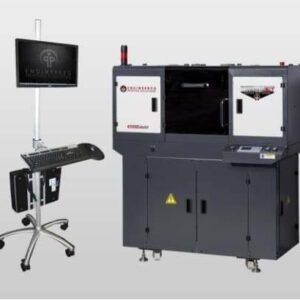
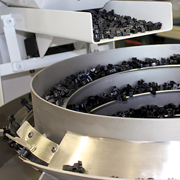
We custom design bowl feeders to your product to allow the part to flow into your printing production line smoothly and efficiently.

Ready to move forward or have questions?

Request a Quote Speak with a Specialist
Share:

Bowl feeders as well as other parts-handling technologies have applications in both industrial inkjet as well as pad-printing solutions.  Indeed, automated parts handling such as bowl feeders are particularly cost-effective for the long production cycles typical of pad-printing solutions to product-marking, as in such cases, parts-handling is frequently the production bottleneck.

Some applications include:

  • Bottle caps
  • Syringes
  • Erasers
  • Electric components
  • Plastic parts
  • Any parts that can be bowl fed

Need Assistance? Call 800-272-7764

Product Add-Ons

Here to Answer Your Questions

Frequently Asked Questions

Whether you’re a new customer or an existing experienced customer, we are here to support you with your ordering and quoting needs.

Browse Resources Contact Us
  • UV Flatbed Inkjet Printers jet ink that upon exposure to ultraviolet light instantly forms polymer bonds.
  • Tagless printing is a cost-effective, comfortable, and customizable alternative to traditional garment labeling.
  • That’s the million dollar question! (Don’t worry. It won’t cost that much.) We’ve already outlined how you might benefit from the addition of an inkjet printer, and how to justify the cost of another piece of equipment, in a previous post. Now you have to match your workload and job requirements to the right machine configuration.
  • In industrial inkjet printing, there are two basic kinds of printheads: Continuous Inkjet (CIJ) heads and Drop-on-Demand (DOD) heads.  At Engineered Printing Solutions, we specialize in DOD industrial inkjet printers.  What is the difference between the two technologies, and what are the advantages and disadvantages of each?  This post will explore these questions.  But first, a quick explanation of the two differing technologies.
  • Good color matching can best be achieved through the use of color profiling software. This software allows for the creation of color profiles which capture the bias imposed by the substrate color and porosity, print resolution, as well as ink set limitations on printable color gamut.

Have additional questions about this product? Need further assistance or technical support? We can help!